

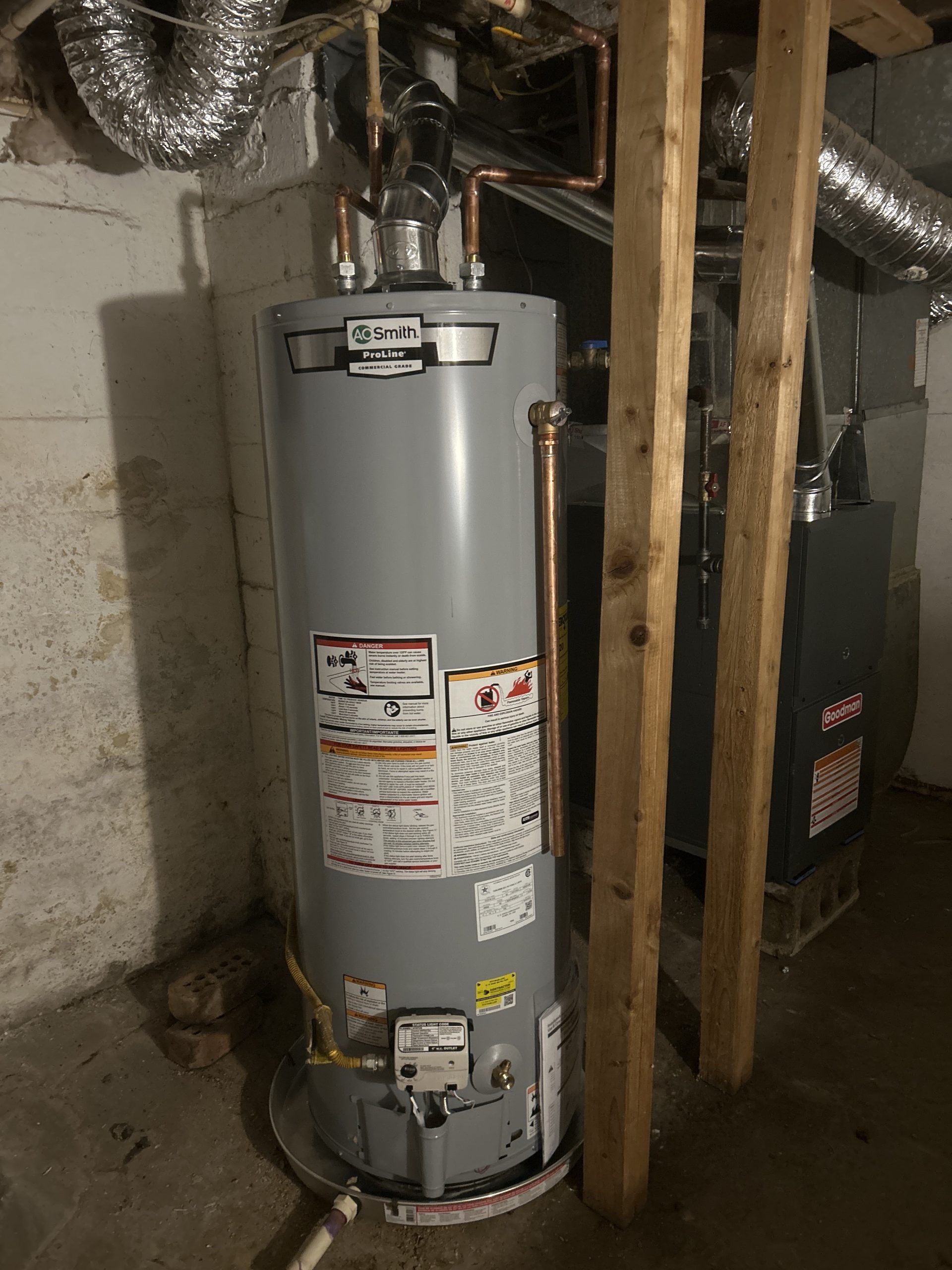
Most homeowners do not think about their water heater until the shower runs cold. By then, the problem has usually been building for a while.
Water heaters tend to give warning signs before they fail. The water takes longer to heat, the tank starts making noise, or a small amount of moisture shows up near the base of the unit. Catching those signs early can mean the difference between a straightforward repair and an unplanned replacement.
For homeowners in Clio and throughout Mid-Michigan, hot water demand climbs as the weather turns cold. That makes fall a good time to pay attention to how your water heater is behaving.
If something seems off, Goblin Heating & Cooling can inspect the system, find the actual cause, and explain whether a repair or a replacement makes more sense before any work begins.
How Long Should a Water Heater Last?
There is no exact expiration date, but tank water heaters approaching 10 to 12 years old are at a common point for failure.
Age is not the only factor. Water quality, how often the tank has been flushed, how much hot water the household uses, and the condition of internal parts all affect how long a unit lasts. Hard well water, which is common in many Genesee County homes, can speed up sediment buildup and wear.
If your water heater is in that age range and has never been flushed or inspected, it is worth having it looked at before it gives you a reason to.
You Run Out of Hot Water Faster Than You Used To
A water heater that once handled back-to-back showers but now runs cold halfway through the first one is telling you something.
Common causes include:
- Sediment buildup at the bottom of the tank
- A failing heating element on an electric unit
- A thermostat that is no longer reading accurately
- A broken dip tube mixing cold water into the hot supply
- A household that has simply outgrown the tank size
Some of these are repairable. Others point toward a replacement, especially on an older tank. A technician can tell the difference.
Rusty or Discolored Hot Water
Hot water that comes out brown, reddish, or with a metallic taste can indicate corrosion inside the tank.
Water heaters contain an anode rod designed to corrode in place of the tank lining. Once that rod is used up, the tank itself can begin to rust. If the discoloration only shows up in your hot water and not your cold water, the water heater is the likely source.
Catching a worn anode rod early is one of the simplest ways to protect a tank. Once the tank itself is corroding, replacement is usually the more practical option.
Popping, Rumbling, or Banging Sounds
Sediment from the water supply settles at the bottom of the tank over time. As the burner or element heats the water, that layer of sediment can trap water underneath it, which produces popping, rumbling, or banging sounds.
Noise alone is not an emergency, but it is a sign the tank is working harder than it should. Sediment buildup can reduce efficiency, lengthen heating times, and add stress to the bottom of the tank.
Regular water heater maintenance, including flushing the tank, helps control sediment before it causes bigger problems.
Water Around the Base of the Tank
Moisture near your water heater should always be checked.
Not every puddle means the tank is failing. The source may be a loose connection, a leaking valve, or the temperature and pressure relief valve doing its job. Those are often repairable.
A leak coming from the tank body itself is a different story. Once the tank is leaking, it generally cannot be repaired, and the leak can get worse quickly.
If you see water around the unit, check where it is coming from and call for an inspection rather than waiting to see if it grows.
The Pilot Light Will Not Stay Lit
On a gas water heater, a pilot light that keeps going out can point to a dirty or failing thermocouple, a problem with the gas valve, or a venting issue.
Because these parts are tied to the gas supply and safety controls, diagnosis is best left to a trained technician. Repeatedly relighting the pilot without finding out why it keeps going out is not a long-term fix.
If you smell gas near the water heater, leave the area and contact your gas utility from outside the home before calling for service.
Should You Repair or Replace Your Water Heater?
The answer depends on the condition of the unit, not just one symptom.
A few factors that help guide the decision:
- The age of the water heater
- Whether the tank itself is leaking
- The cost of the current repair
- How often the unit has needed service
- Whether the tank still meets your household's hot water needs
- Interest in switching to a different type of system, such as tankless
A younger water heater with a failed thermostat, element, or valve is often worth repairing. An older tank that is leaking or corroding usually is not.
When replacement makes sense, proper sizing matters. A unit matched to your household's actual hot water demand performs better than one picked by guesswork. Goblin Heating & Cooling handles water heater installation for both tank and tankless systems.
How Can You Extend the Life of Your Water Heater?
A few habits help a water heater last longer and perform better:
- Flush the tank to remove sediment
- Have the anode rod checked periodically
- Test the temperature and pressure relief valve
- Keep the area around the unit clear
- Pay attention to new noises, odors, or changes in water temperature
- Schedule service when something changes instead of waiting for a failure
Routine inspections also give a technician a chance to check venting, connections, and controls before they become a problem. Maintenance plans can bundle that work with your heating and cooling inspections.
Water Heater FAQs
Why does my hot water smell like rotten eggs?
A sulfur smell in hot water is often caused by a reaction between bacteria in the water and the tank's anode rod. A technician can inspect the anode rod and the tank and recommend the right fix for your water supply.
Can I flush my water heater myself?
Some homeowners do, but a tank that has gone years without a flush can have hardened sediment that clogs the drain valve. If you are not sure about the condition of your tank, having it serviced is the safer option.
Is a leaking water heater an emergency?
A small drip from a valve or fitting is usually urgent rather than an emergency. A leak from the tank itself, or any leak that is growing, should be handled right away to limit water damage.
Should I replace my water heater before it fails?
If the tank is approaching 10 to 12 years old and showing warning signs, planning a replacement on your schedule is usually easier than dealing with a sudden failure.
Schedule Water Heater Service in Clio, MI
A water heater that is struggling usually gives you some notice. Taking that notice seriously keeps a manageable repair from turning into a cold shower and a flooded basement.
Goblin Heating & Cooling provides water heater repair, installation, and maintenance for homeowners throughout Clio, Flint, Grand Blanc, Davison, Burton, Frankenmuth, and surrounding Mid-Michigan communities.
Our technicians focus on finding the actual problem, explaining your options clearly, and providing upfront pricing before work begins.
Call (810) 991-9229 or schedule service with Goblin Heating & Cooling today.